










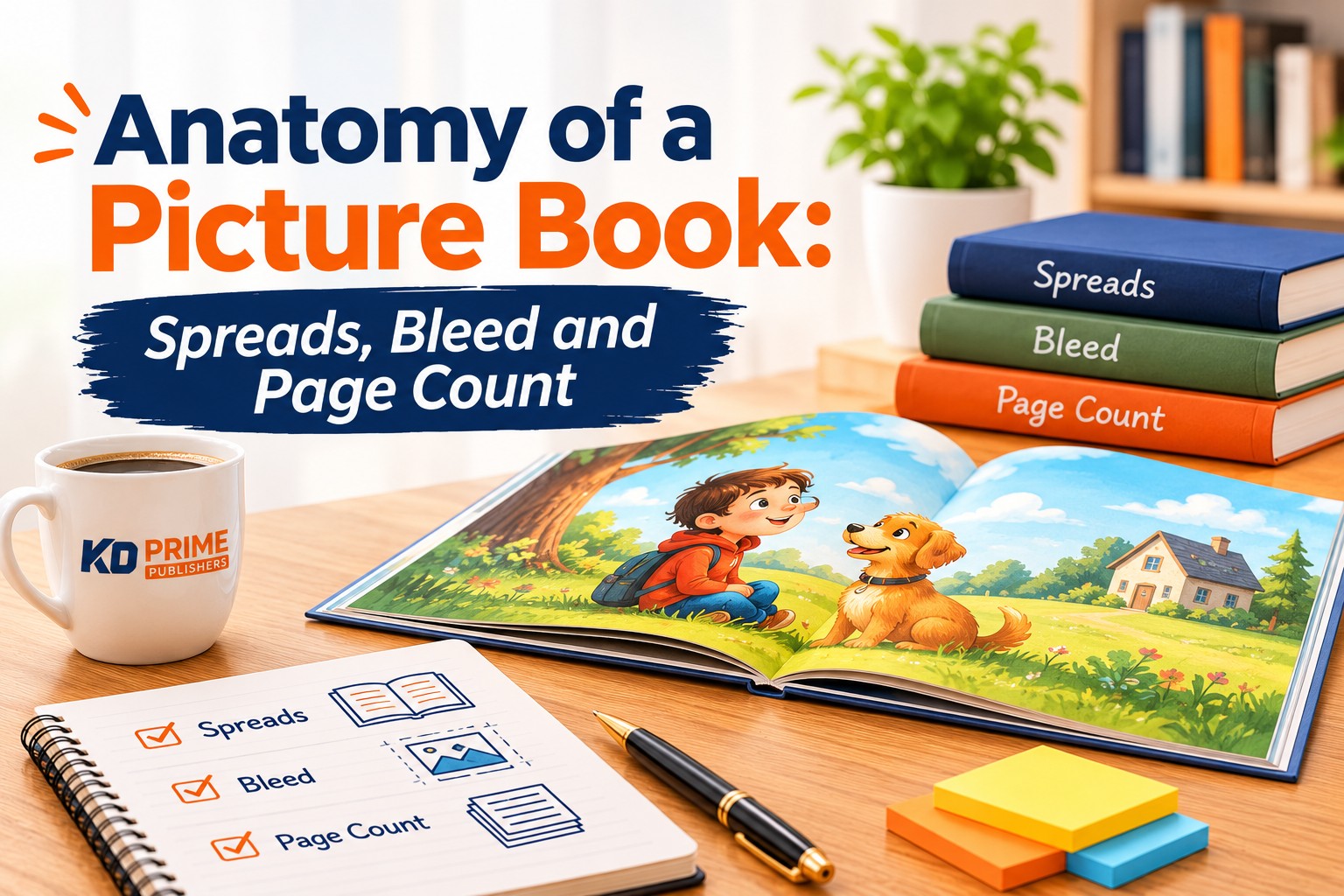
Picture Book Page Count: How Many Pages Should Your Book Have?
You finished your story, you love your main character, and now one practical question is standing between you and an illustrator: how many pages shoul...









Book editing services put a trained editor to work on your manuscript so it reads clearly, holds together and is free of errors before readers, agents or reviewers see it. Editing is not a single job. It is four different jobs, done in a set order, and each one looks at a different layer of the book.
Developmental editing deals with structure: plot, pacing, argument and chapter order. Line editing works on the sentences. Copyediting corrects grammar, spelling, punctuation and consistency. Proofreading is the last check on the laid-out pages. Most manuscripts need some of these, and a few need all four.
We edit for self-publishing authors and for authors preparing a submission to an agent or a traditional publisher. Novels, memoirs and nonfiction are all familiar ground, and the genre section further down explains what changes from one to the next.
Everything is handled online by email, video or phone, so location does not matter. Once the editing is done, the same team can carry the book forward through our book publishing services. If you already have a laid-out proof and only need the final check, see our book proofreading page.
Let our team turn your ideas into a professionally crafted and market-ready masterpiece.
An editor's job is to make your book more like itself, not more like someone else's. Our editors suggest, and you decide.

Editing is a conversation between an author and a second pair of eyes. We keep that conversation open from the first consultation to the final file.
We price editing per word, so the cost follows the length of your book. Starting rates are $0.01 per word for proofreading, $0.02 for copyediting, $0.03 for line editing and $0.04 for developmental editing. A 60,000 word manuscript works out to about $600, $1,200, $1,800 and $2,400 at those rates.
Those are starting points. A manuscript that arrives with heavy revision marks or many errors takes longer, and a complex genre takes more care than a clean standard text. We look at your word count, genre and the condition of the manuscript, and the quote states your final per-word rate.
The quote is free. Timelines and the number of revision rounds are written into it, along with what you receive at each level, and your quote lists every level you choose. Once you have paid in full, you own the finished work. You keep your copyright and royalties.
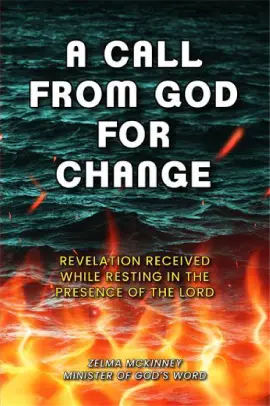
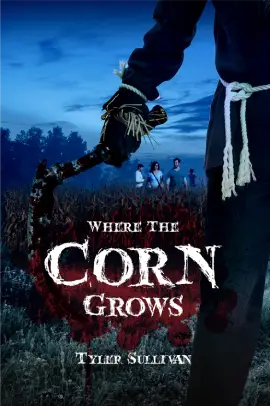


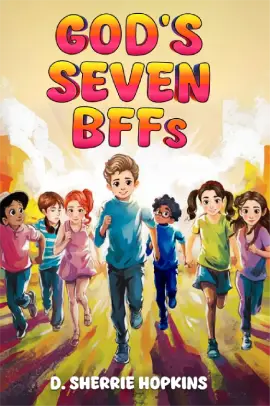



Match the stage your book is at to the level that fits it.
For most books the path runs in that order: developmental editing, then line editing and copyediting, then proofreading after layout. Not every book needs all four, though. A tight, well-structured manuscript from an experienced writer may only need a copyedit and a proofread. Tell us your word count, genre and goals, and we will suggest the right level once we have reviewed them.
The process is simple, and you are kept informed at every stage.
We talk by email, phone or video about your genre, word count and goals, and we look at the condition of the manuscript: grammar, structure, flow and consistency. Nothing is decided yet. This is where we learn what the book needs.
We suggest one or more editing levels and send a free written quote. It states the rate, the timeline, the number of revision rounds and what you receive, so you can weigh it against your budget before committing.
The editor works through the manuscript at the agreed level. Changes come as tracked changes if you request them, and you accept, reject or ask about each one. Key decisions stay with you, as they should.
Once the changes are settled, you receive a clean final version, ready for formatting, publishing or submission. If proofreading is part of the plan, it follows layout so it can catch the last errors, and you can ask questions at that point too.
Genre changes what an editor watches for. Here is how that looks in practice.
If your manuscript is unusual, such as an academic title, a technical manual or a collection of poems, mention it in your first message. We confirm in your quote whether and how we can help.


At the end of the project you receive a professionally revised manuscript, with tracked changes if you asked for them, and a clean final version ready for formatting, publishing or submission. The exact deliverables for each level are listed in your quote, and you have the final say on every change.
After the last edit is also a sensible time to protect the work. You can register your copyright with the U.S. Copyright Office once the text is final.
Price matters, but scope matters more. Before you hire anyone, including us, check these points:
The Editorial Freelancers Association is a neutral reference for how the types of editing are defined in the trade. You can also look at finished books across genres in our portfolio.


Editing happens in stages, and each stage fixes a different kind of problem. The order matters. A line edit on a chapter that later gets cut is money spent twice, and a proofread done before layout misses every error that layout introduces. The table sets out the four levels, what each one does and our starting per-word rate.
| Level | What it does | Starting rate per word | Example: 60,000 words |
|---|---|---|---|
| Developmental editing | Reviews structure, plot, pacing, character arcs, argument and chapter order, and points out gaps and repetition | from $0.04 | about $2,400 |
| Line editing | Improves sentences, rhythm, word choice, tone and clarity | from $0.03 | about $1,800 |
| Copyediting | Corrects grammar, spelling, punctuation and usage, and checks consistency | from $0.02 | about $1,200 |
| Proofreading | Final check for leftover typos, spacing and layout errors | from $0.01 | about $600 |
The 60,000 word figures are an example only, worked out at the starting rates. Rates rise with the condition of the manuscript and the complexity of the genre, and your written quote confirms the number.
A developmental editor reads the whole manuscript and looks at how it is built. In fiction that means plot, pacing, point of view and character arcs. In nonfiction it means the argument, the order of chapters, what the reader should take away, and where the book repeats itself or leaves a gap. The result is a plan for the next draft, not a cleaner copy of this one.
Choose it for a first draft, for a manuscript that feels stuck, or before you send pages to beta readers or agents. It does not fix typos, because there is no point polishing sentences that may be rewritten. If you want someone to do the drafting rather than give feedback, look at ghostwriting, or at novel writing for fiction. What you receive and how many review rounds are included are written into your quote.
A line editor works sentence by sentence on style: rhythm, word choice, awkward phrasing, tone, clarity and the balance of showing and telling. The structure is settled by now, and the aim is prose that reads the way you meant it.
Here is a generic example. Before: The meeting she had been dreading for weeks turned out to be a thing that went by quickly and without much happening in it. After a line edit: The meeting she had dreaded for weeks passed quickly, and nothing much happened.
A copyedit would leave that sentence alone, because it is grammatically fine. That is the usual difference: line editing asks whether a sentence is the best version of itself, and copyediting asks whether it is correct.
Copyediting is the technical pass. The editor corrects grammar, spelling, punctuation and usage, and checks consistency in character names, dates, hyphenation, capitalization and spelling variants. Timeline or fact problems get flagged for you to decide. Most US trade books follow the Chicago Manual of Style, and we confirm the style guide and spelling standard for your book in the quote.
Choose it when the content and style are final and before the book goes to layout. You receive the edited file with tracked changes if you request them, plus a clean version. Layout is a separate job, handled by our book formatting team.
Proofreading is the final check. The proofreader looks for what everyone else missed: stray typos, repeated words, odd spacing, heading and page-number errors, widows and orphans, and broken cross references. It is not a rewrite, and it is not the place for new ideas.
It belongs after formatting, so it can catch mistakes that layout introduces. Which file we proof, the Word document or the typeset PDF, is confirmed in your quote. For this stage on its own, see book proofreading.
Send us your word count, genre and goals, and we will recommend the right level. The quote is free, and what you do with it is up to you.
When the editing is finished, we can carry the book onward with book cover design, layout, publishing and, later, book marketing.
Get a quote, start a live chat or call +1 (877) 402-2338. If you have questions first, contact us.
Hear directly from our satisfied authors about their experience with KD Prime Publishers.
Author
“KD Prime Publishers made my self-publishing journey seamless. Their team guided me through every step, from editing to cover design. The marketing support they provided helped me reach more readers than I ever expected. Highly recommended.”
Author
“I was amazed by how KD Prime Publishers transformed my manuscript into a professional, polished eBook. Their attention to detail in editing and formatting was outstanding, and their marketing team helped increase my visibility across multiple platforms.”
First-Time Author
“As a first-time author, I was nervous about the publishing process. KD Prime Publishers took the stress out of it. From creating an eye-catching cover to offering clear marketing guidance, they made everything simple and approachable.”
Author
“What impressed me most about KD Prime Publishers was their ability to combine strong creative work with a solid marketing plan. They helped position my book in front of the right audience and supported me like true partners in the process.”
Author
“Working with KD Prime Publishers was an absolute pleasure. They helped refine my content, prepare my eBook for multiple platforms, and supported the launch with effective marketing strategies. I've seen a clear boost in both reach and sales.”
Share your details with us, and our team will reach out to you shortly.
Our proven success speaks for itself. We are dedicated to providing every client with unmatched value and customized service.
These are the questions authors ask most about how book editing works.
You finished your story, you love your main character, and now one practical question is standing between you and an illustrator: how many pages shoul...
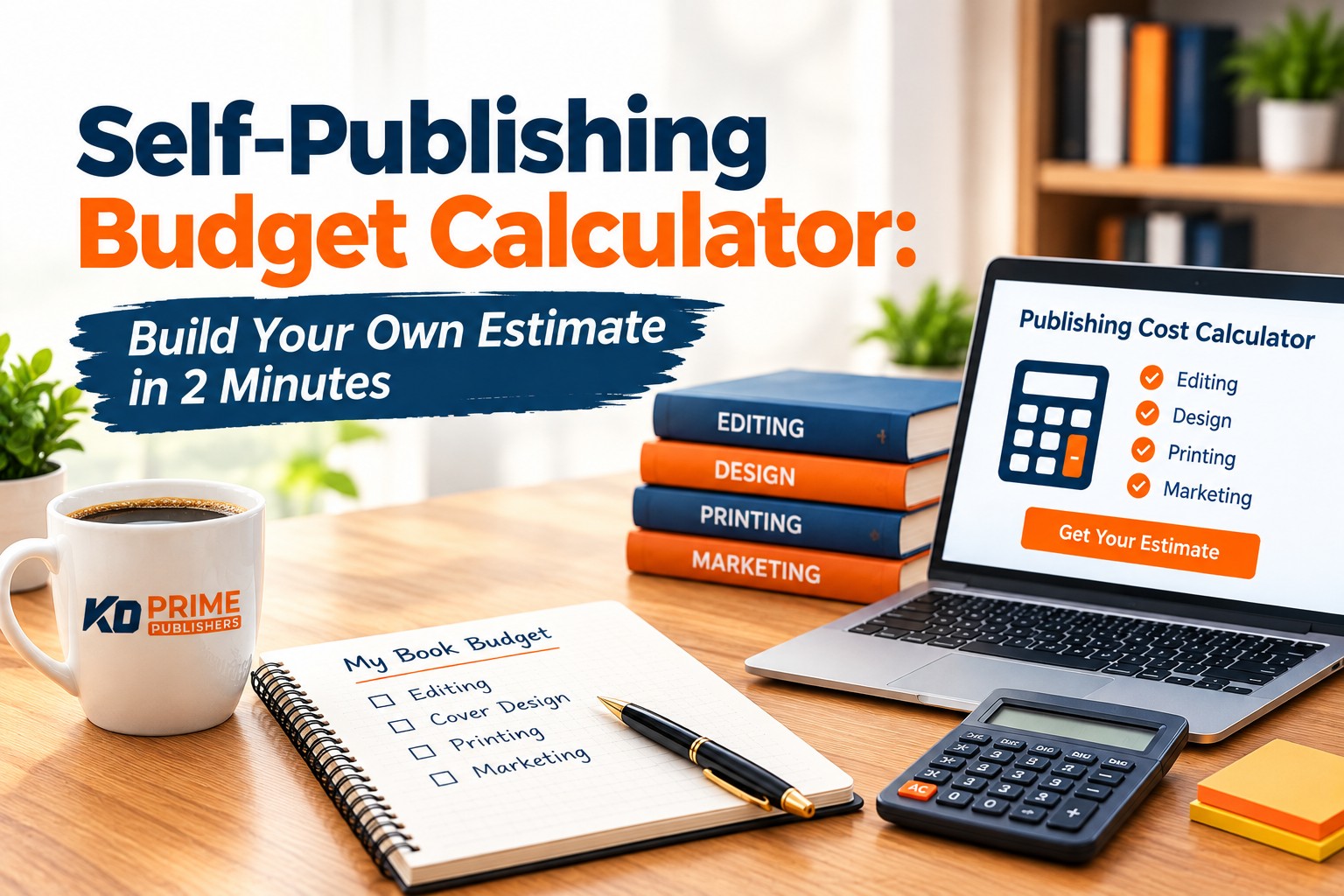
How much does it cost to self-publish a book? It sounds like a simple question, but the honest answer is "it depends." One author spends $200 and uplo...

You have a finished manuscript, a talented illustrator and a clear picture of your book in your head. Then the first sketches arrive, and the bear is...
Last updated October 29, 2026
 DMCA
Disclaimer
KDPrimepublishers.com is operated by KD Prime Publishers.
We operate independently and are not affiliated with Amazon,
Kindle Direct Publishing (KDP), IngramSpark, or any other platform; all trademarks belong to their
respective owners. We respect intellectual property rights and review all formal copyright notices
promptly.
Read More